
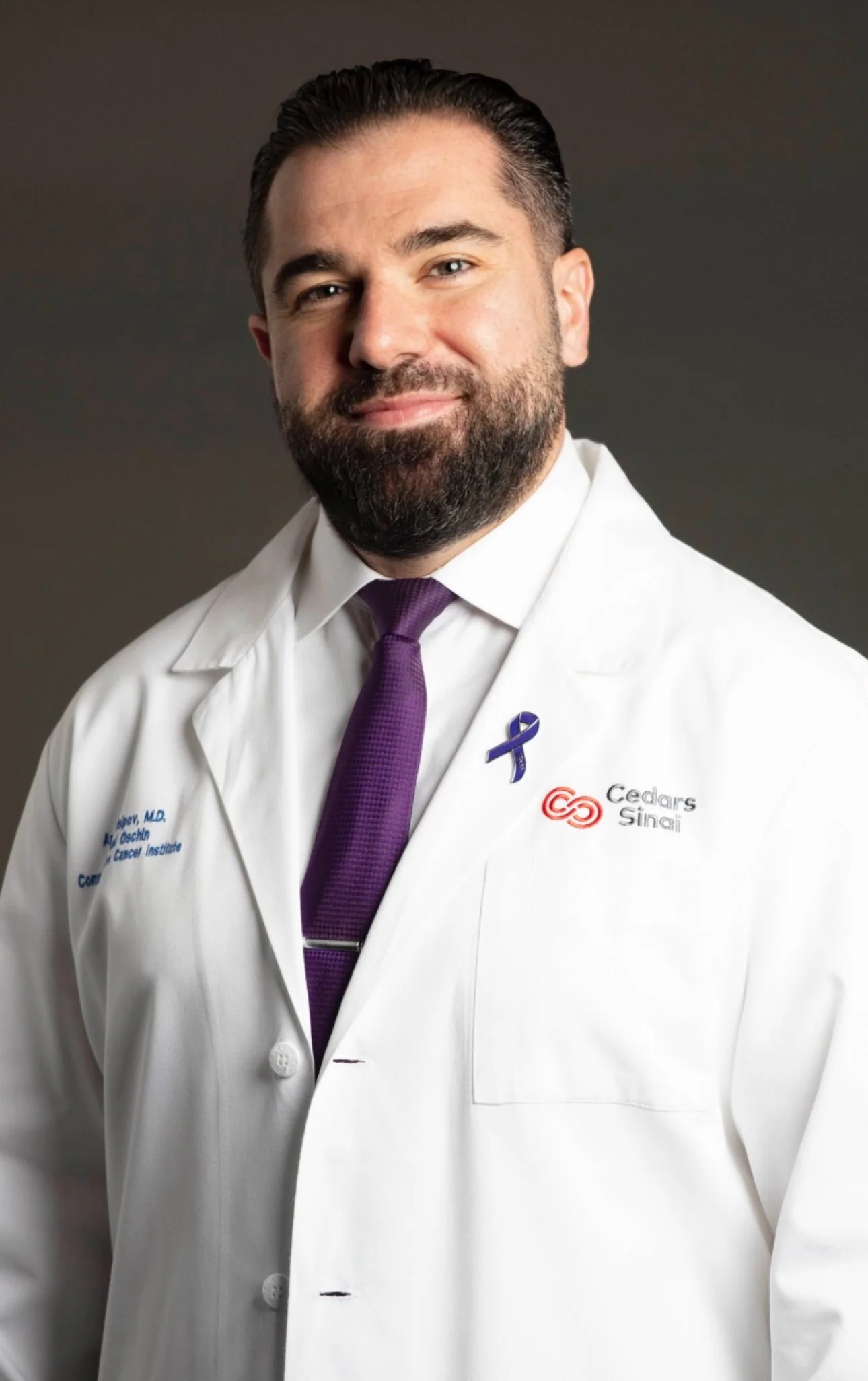
Dr. Arsen Osipov, MD - Read full biography

Dr. Osipov's Pancreatic Cancer Research and Goals
Pancreatic cancer remains one of the deadliest cancers, with minimal improvement in survival over decades. Dr. Arsen Osipov’s research aims to fundamentally change this trajectory by integrating multidisciplinary clinical care, precision medicine, and translational science into a unified, patient-centered framework.
Dr. Osipov’s work at Cedars-Sinai Cancer focuses on three interconnected pillars:
1
Improving access to high-quality, guideline-directed care
Through scalable multidisciplinary clinic models, like Cedars’s Pancreatic Multidisciplinary Clinic to develop a center of excellence that is the global standard for pancreatic cancer care.
2
Advancing biologically informed treatment strategies
Including molecular profiling, immuno-oncology combinations (CAR T approaches, immunotherapy combination strategies, KRAS targeting), and perioperative clinical trials.
3
Leveraging advanced analytics and AI-driven approaches
To identify predictive biomarkers, understand treatment resistance, and personalize therapy for individual patients.
Additional funding will directly accelerate this work by enabling deeper molecular and immune profiling of patient tumors, expanding investigator-initiated clinical trials, and supporting the development of innovative platforms such as “AI-MD” and real-time precision oncology models. These resources will also expand access to cutting-edge care for patients who might otherwise face delays or limited treatment options.
The ultimate goal is to transform pancreatic cancer from a uniformly lethal diagnosis into a disease where patients receive earlier, smarter, and more effective treatment—driven by science, delivered through multidisciplinary care, and continuously refined through data and discovery.
Our Work: Turning Craig’s "Exception" into a Standard
By funding research into these specific genetic signatures, we are working to:

Discover
Others
Identify other patients who have this same genetic "signature."

Develop
New Drugs
Develop new drugs that mimic the "glitch" in Craig’s cancer to make other tumors easier to treat.

Use Precision
Medicine
Move from a "one-size-fits-all" treatment to precision medicine designed for a patient’s specific DNA.
Most pancreatic cancers follow a predictable, aggressive path.
However, Craig’s cancer was biologically unique, and understanding why he defied the odds is the key to helping others do the same.
Decoding the ScienceWhy Craig Was a Super Responder
The Genetic Signature
Every tumor has a "signature" written in its DNA. Craig’s signature had two critical features that Dr. Osipov is now studying:
The KRAS Driver:
Think of KRAS as the "engine" of the cancer. In 90% of patients, this engine runs at full speed, making the cancer hard to stop.
The CFTR Mutation:
This is a rare genetic trait Craig lived with his entire life. In his cancer, this mutation potentially acted like a "glitch" in the tumor’s plumbing (the ductal system).
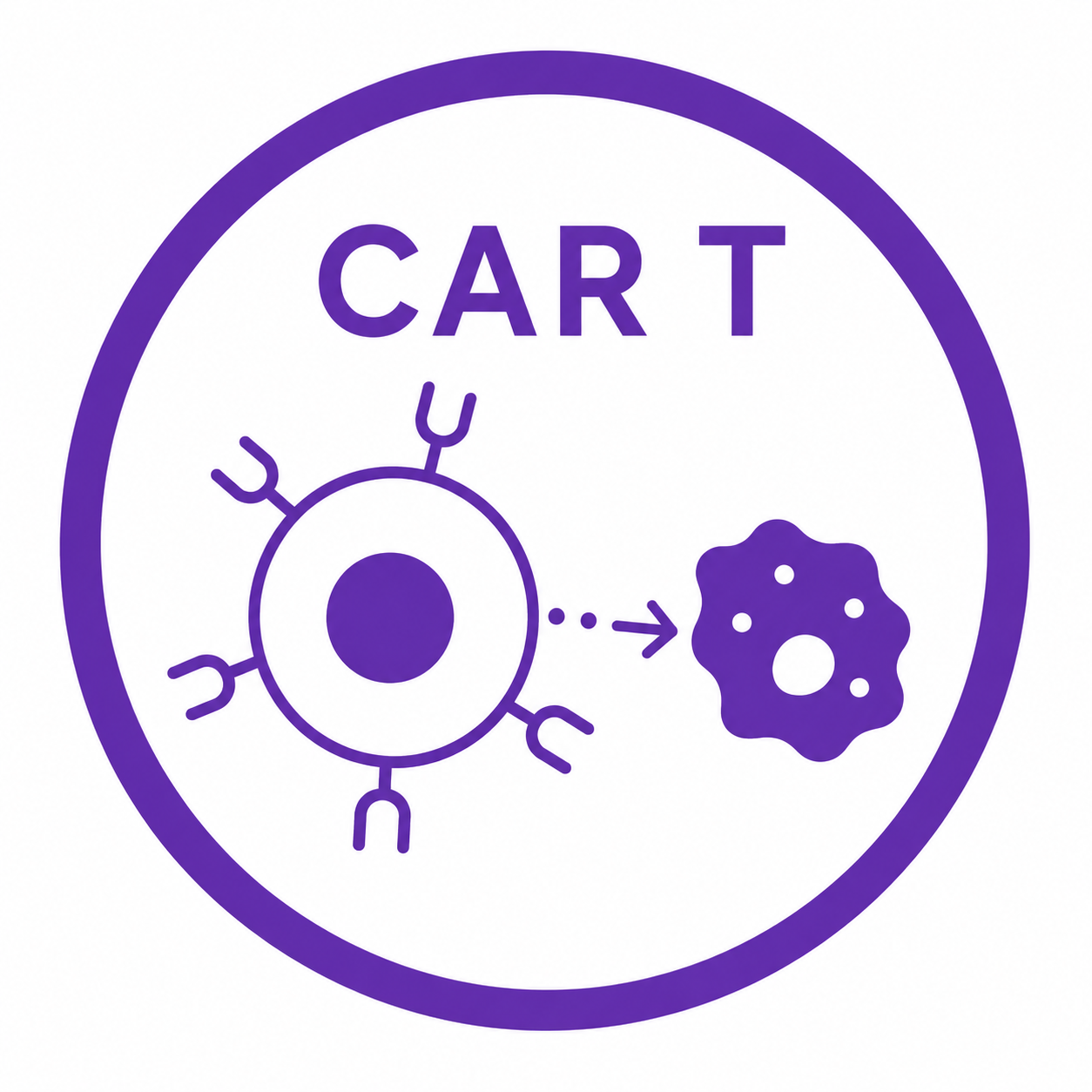
CAR-T for
Pancreatic Cancer
Pancreatic cancer is one of the hardest cancers to treat because it often resists standard therapies and can hide from the immune system. CAR-T cell therapy is an innovative approach that trains a patient’s own immune cells to recognize and attack cancer more precisely.
Dr. Arsen Osipov’s research team is developing a CAR-T cell therapy that targets a specific protein found in pancreatic cancer tumors. This promising target was identified through research using Craig Vittitoe’s tumor samples, creating a meaningful connection between Craig’s journey and the future of pancreatic cancer treatment.
This research offers hope for more effective, personalized therapies for patients facing pancreatic cancer.
Dr. Osipov believes Craig’s tumor and environment was different from the average patient. It may have been more "fragile" or more "visible" to the immune system, allowing the chemotherapy to work more effectively for a much longer period. Unlocking the secrets of KRAS, CFTR, CAR-T, and the tumor microenvironment can potentially lead to new treatments and profoundly change to outcome of this disease.
Our Funding Goals
VPCRF will raise funds for Dr. Osipov's research at Cedars-Sinai. Here are the types of projects we're looking to support in the coming years:
$25,000
The CFTR & KRAS Initiative
Funds a laboratory project to study how specific genetic mutations (like Craig's) interact with the tumor's environment to find better drug targets.
Craig was an exceptional patient who carried both a germline CFTR mutation and a KRAS-driven pancreatic cancer. This project will:
Characterize stromal density, fibrosis, and cancer-associated fibroblast (CAF) subtypes
Quantify immune and myeloid cell infiltration
Analyze KRAS pathway signaling/resistance and the implication of cancer pathways in CFTR/non-CFTR-mutated tumors
Correlate molecular features with clinical outcomes
$50,000
Dedicated Research Associate
Supports a full-time expert to move projects from the lab to the clinic faster, ensuring discovery never pauses.
This investment directly accelerates discovery and ensures clinical insights from the multidisciplinary clinic are translated into publishable, fundable science.
$100,000
Exceptional Patient Program
Uses AI and genomic sequencing to study "outlier" survivors like Craig to uncover why they responded so well — and how to help others do the same.
Funding at this level includes:
Whole-exome or targeted next-generation genomic sequencing
Transcriptomic and proteomic profiling
Spatial immune and stromal mapping
AI-driven integration of large clinical and biological datasets
Research coordinator support for longitudinal clinical tracking
$500,000
Pancreatic Oncology Research & Expedited Precision Care Fund
Expands the "Same Day" clinic model to ensure every patient gets a world-class, multidisciplinary evaluation immediately upon diagnosis. Achieving this goal expands:
Rapid-access multidisciplinary pancreatic cancer evaluation
Expedited molecular profiling integration
AI-driven analysis of large clinical and biological datasets
Translational and preclinical KRAS- and CAR-T tumor microenvironment–targeted research
Strategic collaborations across surgical, medical, radiation, and translational oncology
$1,000,000+
First-in-Class
Clinical Trial
Launches a brand-new clinical trial to test innovative KRAS-targeting treatments and CAR-T in patients much earlier in their journey, when a cure is most possible.
The results of this work will provide the foundation for larger multi-institutional trials and federal funding applications.